Composition requires some practice to master, but it doesn’t have to be a source of frustration. In fact, it can be a fun way to play with elements in a photo. For example, you can tinker with the lines in an image. Lines can be extremely powerful, whether they’re framing the subject or serving as the major focal point in the composition.
To use lines effectively in a photo, first choose whether you want the lines to be the main subject of the photo or just a side note. Then, decide whether the lines are going to be directional (horizontal/vertical) or clearly diagonal. Keeping lines distinct will prevent confusion and make your image more powerful.
James Drury - divergence

For more guidance on photographing lines, check out the following tips:
Lines as the main subject
Focusing on lines as the main subject is actually easier than including them subtly in the image. Railroad tracks, fence posts, and lines along a road are all common subjects. Less obvious subjects could be a horizon, window frames, and background objects like a pile of books.
When lines are the subject, they must form a recognizable pattern for the viewer to understand. For example, if you’re photographing railroad tracks, it’s best if they’re consistent and central to the image. If not, they might clutter or confuse the viewer’s perception. Likewise, lines that are crooked or imbalanced could ruin an otherwise perfect image.
Ximo Michavila - 3XN. FIH domicile #6

Ben Roffelsen - Cold Sunset on the Railwaylands

Vertical and horizontal lines
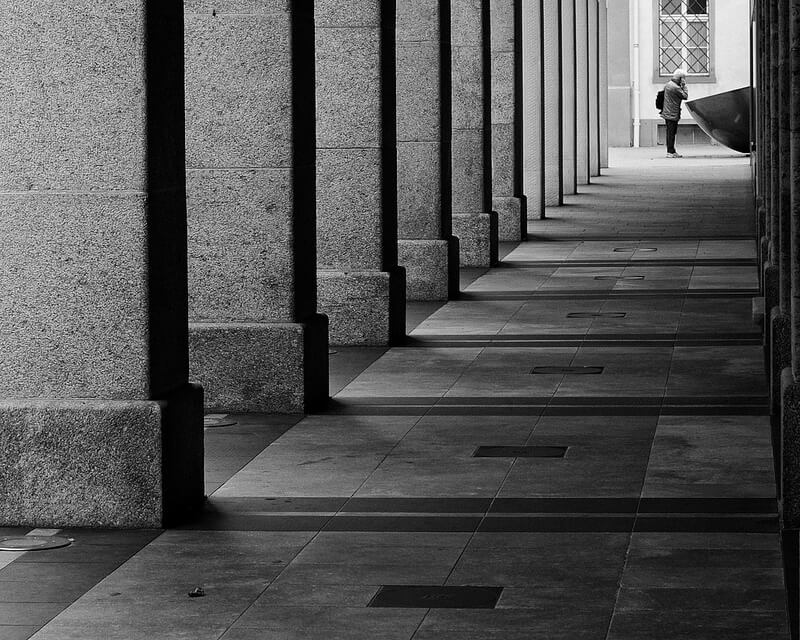
Horizontal and vertical lines are distinctly directional and best photographed in their direction. In other words, if you take a shot of vertical lines, hold your camera in portrait mode. This direction will look most natural to the viewer.
Additionally, horizontal and vertical lines should be as straight as possible. Otherwise, the image might look imperfect to the viewer. This is especially true of lines that are slightly skewed, since they neither seem perfectly straight nor clearly diagonal.
However, if a line is obviously tilted, the viewer will perceive that slant as intentional. Just make sure any lines you intentionally tilt come across that way to viewers, too.
Ph0n31x - do u remember the glory days?

Manuel Buetti - Arcade Chur
Diagonal lines
Diagonals are more flexible than horizontals and verticals. They can bend across the image and slant in any direction. Precision isn’t as important–although they should clearly be diagonals and not just crooked directional lines.
Many landscape photographers actually prefer diagonals over horizontal/vertical lines. They tend to make dull landscapes more interesting. Although landscapes already contain at least one distinct horizontal line (the horizon), this line could seem “flat” and lack originality. That’s why many successful landscape photographs use trees, walls or roads to give a photograph some distinguished areas.
Hadley Johnson - Follow The Fence Line

Елена Пејчинова - Show me the path

Regardless of which line you photograph, the presence of lines in composition can add depth or drama to a scene. Once you’ve mastered them individually, try mixing them in a photo to see how that changes the quality of the composition. Above all, have fun!
James Drury - radiate

RICOW.de - manhattan bridge

These photos were selected from our Flickr group. Next time you photograph interesting lines, share your image with the group so we can admire your work!