12
The Prime Lens – Pros and Cons
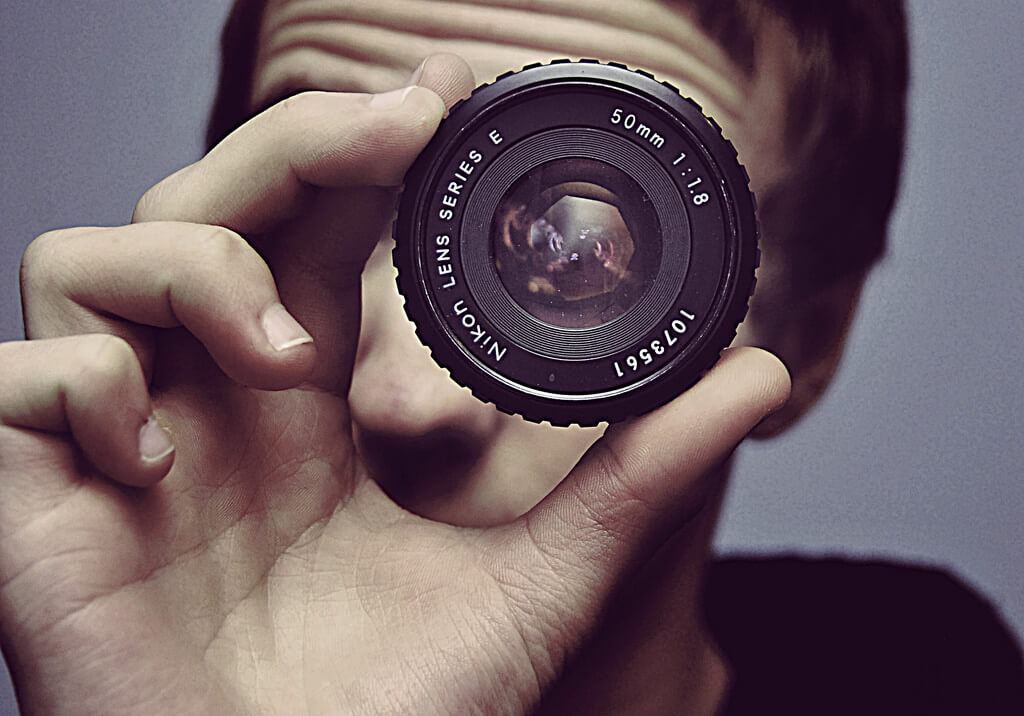
What is a “prime” lens, you say? A prime lens is a fixed focal length lens, like 24mm or 85mm. Every photographer needs at least one, if not two, prime lenses… depending on what he or she gravitates to in terms of subject matter or aesthetics.
I have Nikon 24mm that is my workhorse lens, its perspective distortion is just enough to be noticeable, but not distracting and its angle of view and coverage is great.
But why a prime in the first place, isn’t it restricting? “I want a zoom because it gives me flexibility.” Sure, Zooms give you flexibility in terms of focal length, but as with everything in life, there is a trade-off. The trade-off is typically at least two fold (if not more) with zooms compared to a prime lens. The first thing you must give up is the speed of the lens. By this I mean how wide the aperture opens up. For example I have a Nikkor AF 28-80mm f/3.5-5.6 D zoom. I like this lens a lot, but what I don’t like (and this is inherent in the zoom lens because of the additional lens elements required to make the zoom work) is that when I’m at the shortest focal length (in this case 28mm), my lowest f-stop is f/3.5, but as I zoom out the lens to 80mm my lowest f-stop becomes f/5.6 – effectively stopping me down 1.5 stops of light.
In addition to maintaining a constant f-stop, prime lenses are usually super-fast. I have a Nikon 50mm f/1.4D, now this lens is not only super-fast (I can get readable images with non-existent or negligible noise in extremely low-light) it’s also super-sharp. Sharpness and vivid image accuracy is the other trade-off with zooms. Prime lenses tend to be sharper and provide more accurate color, because there are less glass elements between the subject and the image sensor (or frame of film, if you’re still shooting with film). Unless you’re going to be purchasing the tippy-top of the line zoom lens (which run about two grand or more), the number optical elements in a zoom lens increase the propensity of image resolving artifacts that prevent your images as being as beautiful, clean and vivid as possible.
Something else to consider; the focus ring on a prime lens is more sensitive than a zoom’s. Now you might be saying, “I use auto-focus”, but do you really use it for all your photos? Of course not. To achieve critical focus while manually focusing you’ll want as much play as possible on the focus ring to find the sweet spot. Prime lenses have a more dynamic focus ring that will enable you to get all the subtle focus variations that you might want (and need) with optimal control.
The obvious cons in using a prime lens is that you have a fixed focal length, which means a fixed angle of view and a fixed set of photographic properties achievable with this prime lens. So you might have to move around a lot more to get the compositions that you want, and even then you might have need for the properties of a telephoto lens or a wide angle and not have those properties available with a twist of the wrist.
Granted you can find work-around for every drawback that the zoom lens has, but at the end of the day the best image quality will come from a prime lens… and that’s of prime important to many photographers.
Here are a few more great prime lenses you might want to take a look at :
Nikon 85mm f/1.4D AF Nikkor Lens – This little jewel is probably considered one of the top 5 best lenses Nikon has made and is probably the best for portrait photography.
Nikon 50mm f/1.8D AF Nikkor Lens - This is a very fast, distortion free lens and at around $134 this really is a must have.
Nikon 28mm f/2.8D AF Nikkor Lens- Great color and extremely sharp. Also does really well in low light.
Nikon 35mm f/1.8G AF-S DX Lens- This lens is extremely light weight and silent. It’s perfect for portraits and other general purpose uses.
Feature image by enggul
Chris Derrick is a writer, photographer, screenwriter and director living and working in Los Angeles. He studied film production and screenwriting at the University of Southern California, and continued to expand his photographic knowledge through classes at the Art Center College of Design.
Website: shadowboxercinema.com
If you have any other recommendation on prime lenses please let us know!
If you enjoyed the article, help us spread the word by giving us a tweet!
Tweet ThisSubscribe to our RSS feed
12 Comments
-

PhotoNerd
September 21stNice info. My prime stays on my camera most of the time. I love it.
-

Tim Dempsey
September 21stYou forgot my most precious lens… the Nikkor 85mm f/1.4. The “cream machine,” someone once called it on my blog. Oh the love of the prime never dies!
-

Bill Jones
September 21st@Tim
Ah yes how could have missed that one. Added to the list. Thanks! -

@todayinart
September 23rdWhat about the Canon Kids like me? ;-) I don’t have many lenses, yet, but love my 50mm f/1.8 II Autofocus Lens – like $100. I will be adding a new lens to my bag this Christmas, so if anyone has ideas I am all ears. Would like to stay under $500 :-)
-

Christopher Derrick
September 27thFor you all Canon-heads out there, I’m partial to Nikon because that’s what I’m using now. If I could afford it, I use that new Leica M9, full-frame digital rangefinder. But since I don’t have $5000 to put down the camera body, I use my Nikon. The different between the Canon f/1.8 and the Nikon f/1.4 is only half a stop of light, but you might need that half a stop… so you’ll be pushing your image sometime, somewhere. somehow… and there’s nothing wrong with that.
-

GrumZ
September 30thI’m also a big fan of primes and I agree with you on everything but your main cons.
In fact, IMHO, the fact that you have to move to get your composition as you want, is an advantage in the long term, because it forces you to find another point of view and as you do that, the lighting changes, the perspective changes and you improve your composition skills a lot.
The zooms seems more comfortable at first, but it reduces your creativity in the long terms because you just sit somewhere and do a twist of the wrist.
By the way, it’s true that some times you simply can’t get the composition you want because of the obstacle presents (barrier, river, etc.)
-

Christopher Derrick
September 30thGrumz,
The “con” about moving around to get the composition that you want, is only a “con” if you’re a bit pedantic about “getting that shot”, because of course everything you say is completely true. By moving around you can find a different take on the subject that might be more intimate or more expressive or more stark. And you would have only found that IF you have the “limitation” of a prime. I don’t use my zoom that much, if at all. And now that saw that Leica’s new M9 has a full-frame 18mp sensor, if I can afford to pick that up a few choice (new and vintage) lenses, I don’t know about using a zoom again! Painters have constraints when using a certain size canvas, and it enables them to focus on other aspects of their vision. A prime lens provides the same creative “constraint.”
Thanks for reading…
-

Mark
October 6thVery informative and useful article. Thank you! I just picked up a Nikon 50mm f/1.8D AF Nikkor Lens and am really looking forward to learning and growing with it. Thanks again for the quick and excellent explanations.
-

Bill Jones
October 7th@ Mark
Thanks! I’m glad you found the article helpful.
-

Steve Calwell
November 16thGreat article, but to comment on the Canon side of things, Canon have prime lenses that go down to f/1.2 . Having said that, my next camera will be a Nikon, with nothing but prime lenses.
-

Dee
November 17thI love prime lenses for shooting portraits especially. Thanks for this sharing this! It is clear enough about how good prime lens can be! I have 2 for my D40! =)
-

Luke
November 22ndAnother “con”, which may not be obvious to all, but is certainly something to bear in mind for someone in my circumstance, is the fact that (recognizing the pros/cons above), having prime lenses for a number of situations which you might be/are planning to shoot takes up real estate in a bag and adds to the weight of your kit.
I am currently traveling around SE Asia, and whilst my Canon 50mm f1.8 did make it into my bag of tricks, if I were to carry primes for the focal lengths I would possibly be shooting at, I would be well and truly over the baggage limits which I already routinely nudge.
Primes are great, I will certainly pay that, but, unfortunately, zooms will always have to be a standard piece of my kit.


RSS Feed
Follow us on Twitter